
Why Leading Manufacturers Are Upgrading to Smart IO forming machines This Year
2025 has marked a decisive turning point in global manufacturing, as leading enterprises across automotive, electronics, aerospace, and precision engineering sectors accelerate upgrades to smart IO forming machines. This industry-wide shift is not a fleeting trend but a strategic response to evolving market demands, technological advancements, and the urgent need for operational resilience—redefining how manufacturers balance efficiency, precision, and sustainability.
The Breakdown of Traditional Equipment: A Push for Innovation
For decades, conventional IO forming machines have underpinned production lines, but their limitations have become untenable amid modern manufacturing pressures. These legacy systems rely on manual parameter adjustments, lack real-time data integration, and operate in siloed workflows, leading to persistent challenges: production bottlenecks from slow setup times, higher defect rates due to human error, and inefficient resource utilization that drives up operational costs.
As market expectations shift toward mass customization, shorter lead times, and stricter quality standards, traditional machines can no longer keep pace. The inability to adapt quickly to changing production requirements, coupled with rising energy costs and labor shortages in key manufacturing hubs, has created an urgent imperative for technological upgrading—one that smart IO forming machines are uniquely positioned to address.
Core Advantages of Smart IO Forming Machines: The Pull of Transformation
Smart IO forming machines are redefining manufacturing capabilities through three game-changing features, making them indispensable for forward-thinking producers:
First, intelligent connectivity and data-driven operations stand at the heart of their appeal. Integrated with industrial IoT (IIoT) sensors and cloud-based platforms, these machines collect real-time data on temperature, pressure, forming precision, and energy consumption. This visibility enables predictive maintenance—identifying potential equipment failures before they cause downtime—and allows for dynamic parameter adjustments to optimize production quality, reducing defect rates by up to 40% compared to traditional systems.
Second, automation and adaptive flexibility address the industry’s need for agility. Equipped with AI-powered control systems, smart IO forming machines can self-calibrate, switch between production tasks in minutes (instead of hours), and accommodate custom specifications without sacrificing speed. This flexibility is critical for manufacturers navigating fluctuating order volumes and diverse product portfolios, enabling them to meet short lead times while maintaining economies of scale.
Third, sustainability and cost efficiency align with global environmental goals and bottom-line priorities. Smart IO machines optimize energy usage by adjusting power consumption based on production load, cutting energy costs by 25-30% on average. Their precision also minimizes material waste, a key advantage as raw material prices rise and regulatory pressure for eco-friendly production intensifies.
Market and Policy Drivers: Accelerating Adoption
Beyond technical advantages, broader market and policy trends are fueling the upgrade wave. Governments worldwide are rolling out initiatives to promote "smart manufacturing" and low-carbon production, offering incentives for enterprises to invest in energy-efficient, digitalized equipment. These policies, combined with growing consumer demand for products made with sustainable processes, are pushing manufacturers to prioritize green technology upgrades.
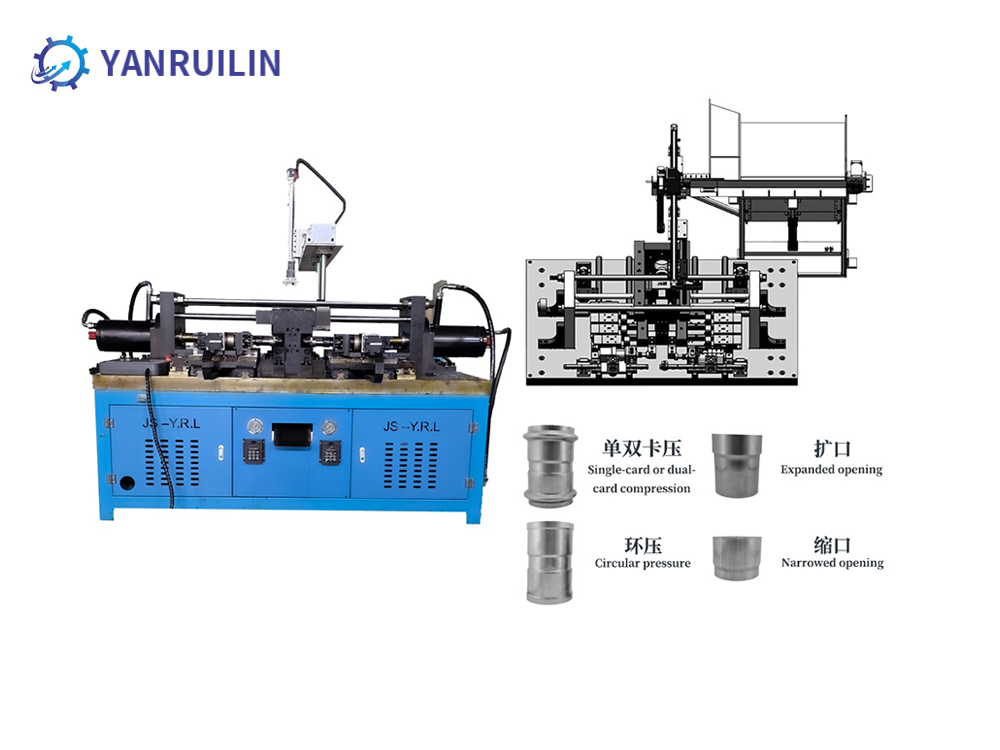
Additionally, global supply chain volatility has highlighted the need for production resilience. Smart IO forming machines reduce reliance on manual labor and enable remote monitoring and control, allowing manufacturers to maintain operations even amid disruptions such as labor shortages or geographic restrictions. This resilience has become a competitive differentiator in an uncertain market.
The Future of Manufacturing: A New Standard
As more manufacturers adopt smart IO forming machines, the technology is quickly becoming a benchmark for industry competitiveness. Early adopters have reported double-digit improvements in production efficiency, significant cost savings, and enhanced ability to win high-value contracts—advantages that are compelling latecomers to accelerate their upgrade plans.
This shift is not just about replacing old machines with new ones; it’s about reimagining manufacturing as a connected, intelligent, and sustainable ecosystem. Smart IO forming machines are the cornerstone of this transformation, enabling manufacturers to meet today’s demands while positioning themselves for the challenges of tomorrow—from further customization to net-zero carbon goals.
For leading manufacturers, the choice to upgrade is clear: in 2025 and beyond, smart IO forming machines are no longer a luxury, but a necessity to stay relevant, efficient, and competitive in the global marketplace.
Этот веб-сайт использует файлы cookie, чтобы обеспечить вам максимально эффективное использование нашего веб-сайта.

 English
 Español
 Deutsch
 日本語
日本語 한국어
한국어 Italiano
 Türk dili
 हिन्दी
 Indonesia


Комментарий
(0)