
In tube fabrication processes, tube thickness stands as a defining factor that directly influences the performance, precision, and durability of hydraulic Tube end forming machines. From thin-walled tubes used in precision instrumentation to thick-walled variants for heavy-duty industrial applications, selecting equipment tailored to specific tube thickness requirements is critical to avoiding material damage, ensuring forming quality, and optimizing production efficiency. As manufacturers across industries—including automotive, aerospace, construction, and industrial machinery—handle diverse tube thicknesses, understanding the key considerations for machine selection has become essential for unlocking consistent, high-quality results.
Tube thickness, typically measured as wall thickness (WT) or outer diameter (OD) to wall thickness ratio, dictates the mechanical forces, tooling design, and control capabilities required of a hydraulic tube end forming machine. Thin-walled tubes (often defined as wall thickness below 1.5 mm for small diameters) are prone to collapse, wrinkling, or uneven deformation under excessive pressure, while thick-walled tubes (exceeding 5 mm in many industrial contexts) demand sufficient force to achieve proper shaping without compromising structural integrity. A mismatch between machine capabilities and tube thickness can lead to costly issues: undersized machines may fail to form thick-walled tubes adequately, while oversized equipment risks damaging thin-walled workpieces or wasting energy.
The first step in selecting the right machine is assessing force capacity, as Hydraulic tube end forming machines deliver pressure to shape tubes through hydraulic cylinders. For thin-walled tubes, machines with lower force ratings (typically 30 kN to 80 kN) are ideal, as they provide gentle, controlled pressure to prevent deformation. These machines often feature adjustable pressure settings and slow feed rates to ensure uniform material flow. In contrast, thick-walled tubes require higher force outputs (ranging from 100 kN to 300 kN or more) to overcome material resistance and achieve precise forming. Manufacturers must verify that the machine’s maximum force aligns with the tensile strength and thickness of their target tubes—high-strength materials like carbon steel or alloy steel with greater wall thickness will demand higher force than softer materials such as aluminum or copper of the same thickness.
Tooling compatibility is another critical factor tied to tube thickness. Thin-walled tubes require tooling with smooth, rounded edges and precise clearances to avoid digging into the material or causing wall thinning. Tooling for thin tubes often incorporates flexible or adaptive designs to distribute pressure evenly, reducing the risk of wrinkling. For thick-walled tubes, tooling must be constructed from high-strength materials (such as carbide or hardened steel) to withstand the higher forces involved, with sharp, rigid profiles to ensure deep, consistent forming. Additionally, tooling diameter and cavity design must match the tube’s outer and inner dimensions—machines with interchangeable tooling systems offer greater versatility for handling multiple tube thicknesses, as operators can switch between tool sets tailored to specific applications.
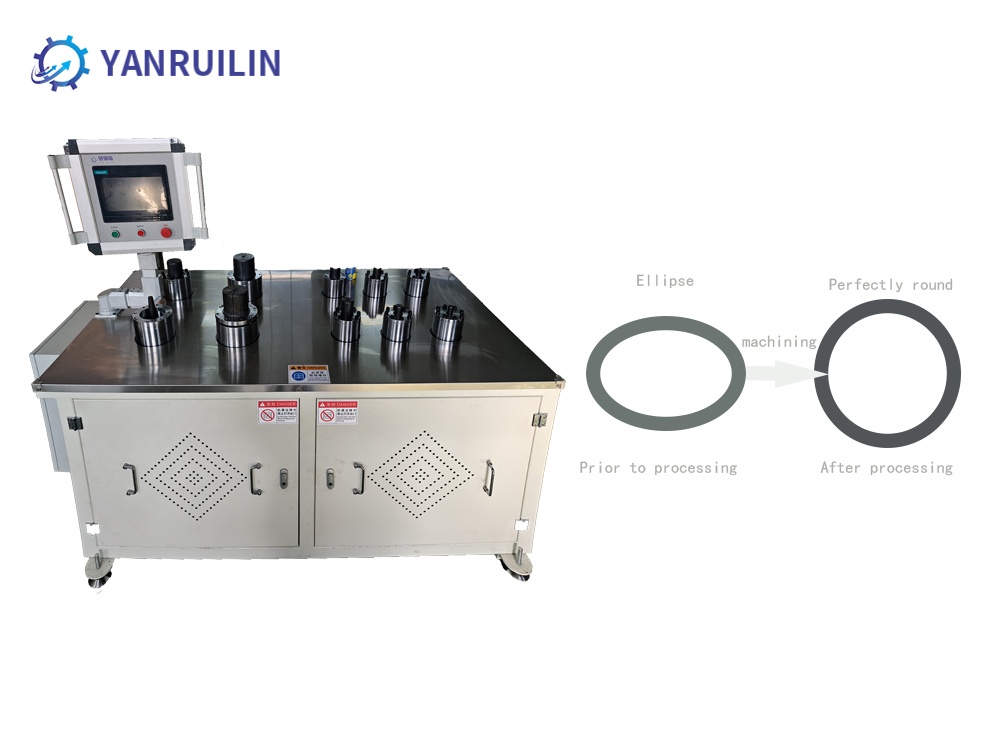
Control system precision plays a pivotal role in accommodating varying tube thicknesses. Machines equipped with closed-loop servo-hydraulic control systems excel at adapting to thickness variations, as they continuously monitor pressure, position, and feed rate, making real-time adjustments to maintain consistency. For thin-walled tubes, precise pressure regulation prevents overforming, while for thick-walled tubes, synchronized multi-axis control ensures that forming force is applied evenly across the tube’s cross-section. Advanced control features such as programmable pressure profiles allow operators to input specific parameters based on tube thickness—for example, ramping up pressure gradually for thick tubes to avoid material cracking, or using lower, steady pressure for thin tubes to prevent collapse.
Machine rigidity and stability are often overlooked but essential for handling different tube thicknesses. Thin-walled tube forming requires minimal vibration to avoid distortion, so machines with robust frames, damping systems, and stable clamping mechanisms are preferred. Thick-walled tube forming, which generates higher forces, demands rigid structures to prevent machine deflection during operation—deflection can lead to dimensional inaccuracies or uneven forming. Additionally, clamping systems must be adjustable to accommodate varying tube thicknesses: soft, non-marring clamps for thin tubes to prevent surface damage, and heavy-duty, high-grip clamps for thick tubes to ensure secure positioning during high-force forming.
Material compatibility intersects with tube thickness in machine selection. For example, a thick-walled titanium tube requires a machine with higher force and heat-resistant tooling than a thick-walled aluminum tube, as titanium’s higher tensile strength and lower ductility demand more controlled forming. Some hydraulic machines offer temperature control features—such as in-process heating or cooling—to optimize material ductility based on thickness and material type. This is particularly valuable for thick-walled tubes made from high-strength alloys, as heating can reduce the force required for forming, while cooling prevents overheating and material degradation in thin-walled tubes.
Operational flexibility is key for manufacturers handling multiple tube thicknesses. Machines with modular designs, quick-change tooling, and programmable parameter storage allow for seamless switching between thin and thick tubes, reducing setup time and improving productivity. Additionally, machines with adjustable forming speeds enable operators to match the process to tube thickness—slower speeds for thick tubes to ensure complete forming, and faster speeds for thin tubes (when appropriate) to optimize cycle time without compromising quality.
As tube fabrication requirements become increasingly diverse, selecting a hydraulic tube end forming machine tailored to tube thickness has become a strategic decision that impacts quality, efficiency, and cost-effectiveness. By prioritizing force capacity, tooling compatibility, control precision, rigidity, material compatibility, and operational flexibility, manufacturers can ensure that their equipment meets the unique demands of their target tube thicknesses. Whether processing delicate thin-walled tubes for precision applications or heavy-duty thick-walled tubes for industrial use, the right machine selection ensures consistent, reliable forming results while extending equipment lifespan and minimizing waste. With ongoing advancements in hydraulic technology and control systems, modern machines offer greater adaptability than ever before, enabling manufacturers to handle a wide range of tube thicknesses with confidence.
Этот веб-сайт использует файлы cookie, чтобы обеспечить вам максимально эффективное использование нашего веб-сайта.

 English
 Español
 Deutsch
 日本語
日本語 한국어
한국어 Italiano
 Türk dili
 हिन्दी
 Indonesia


Комментарий
(0)